

Science of Climate Change header

The science of climate change

This publication from the Australian Academy of Science answers key questions about climate science, including where there is consensus in the scientific community and where uncertainties exist.

This publication from the Australian Academy of Science aims to address confusion created by contradictory information in the public domain. It sets out to explain the current situation* in climate science, including where there is consensus in the scientific community and where uncertainties exist.

*Please note: The Academy published updated climate change information in March 2021. Read The risks to Australia of a 3°C warmer world".

Dots decorative image
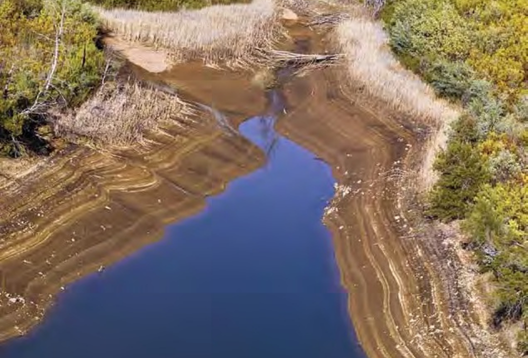
Low water levels in the Cotter Dam near Canberra

Summary

Earth’s climate has changed over the past century. The atmosphere and oceans have warmed, sea levels have risen, and glaciers and ice sheets have decreased in size. The best available evidence indicates that greenhouse gas emissions from human activities are the main cause. Continuing increases in greenhouse gases will produce further warming and other changes in Earth’s physical environment and ecosystems.
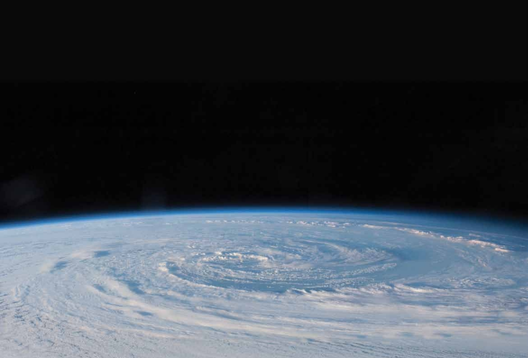
Hurricane from the air

1 What is climate change?

The term ‘climate’, in its broadest sense, refers to a statistical description of weather and of the related conditions of oceans, land surfaces and ice sheets. This includes consideration of averages, variability and extremes. Climate change is an alteration in the pattern of climate over a long period of time, and may be due to a combination of natural and human induced causes.
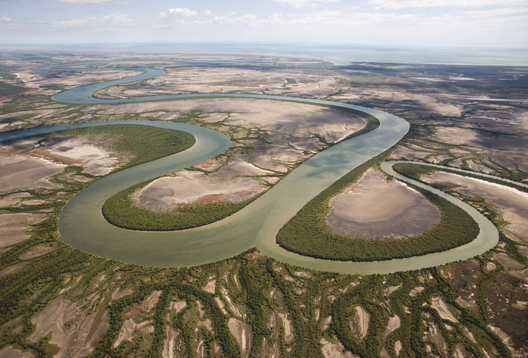
Aerial view of the Norman River flowing towards the Gulf of Carpentaria in far north Queensland.

2 How has climate changed?

Global climate has varied greatly throughout Earth’s history. In the final decades of the 20th century, the world experienced a rate of warming that is unprecedented for thousands of years, as far as we can tell from the available evidence. Global average temperature rise has been accompanied by ongoing rises in ocean temperatures, ocean heat storage, sea levels and atmospheric water vapour. There has also been shrinkage in the size of ice sheets and most glaciers. The recent slowdown in the rate of surface warming is mainly due to climate variability that has redistributed heat in the ocean, causing warming at depth and cooling of surface waters. Australia’s climate has warmed along with the global average warming.
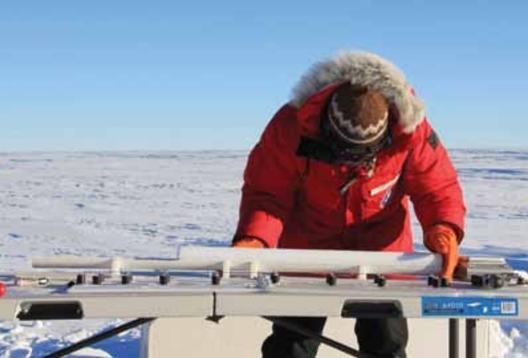
Scientists use ice core samples to reconstruct climatic records over hundreds of thousands of years.

3 Are human activities causing climate change?

Human activities are increasing greenhouse gas concentrations in the atmosphere. This increase is extremely likely to have caused most of the recent observed global warming, with CO2 being the largest contributor. Some observed changes in Australia’s climate, including warming throughout the continent and drying trends in the southwest, have been linked to rising greenhouse gas concentrations.
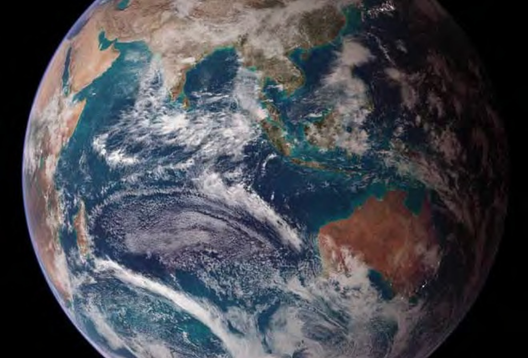
Earth from space.

4 How do we expect climate to evolve in the future?

If greenhouse gas emissions continue to grow rapidly, it is expected that, by 2100, the global average air temperature over the Earth’s surface will warm by around 4°C above mid-19th century temperatures. There are many likely ramifications of this warming. However, if emissions are reduced sufficiently rapidly, there is a chance that global average warming will not exceed 2°C and other impacts will be limited.
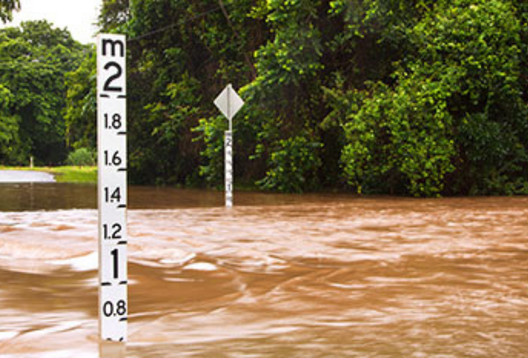
Floodwater

5 How are extreme events changing?

Since the mid-20th century, climate change has resulted in increases in the frequency and intensity of very hot days and decreases in very cold days. These trends will continue with further global warming. Heavy rainfall events have intensified over most land areas and will likely continue to do so, but changes are expected to vary by region.
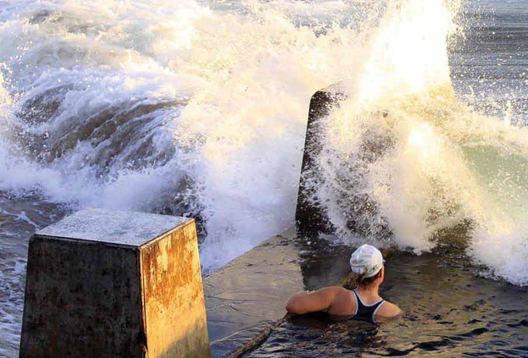
Coogee Beach sea pool, NSW

6 How are sea levels changing?

Sea levels have risen during the 20th century. The two major contributing factors are the expansion of sea water as it warms, and the loss of ice from glaciers. Sea levels are very likely to rise more quickly during the 21st century than the 20th century, and will continue to rise for many centuries.
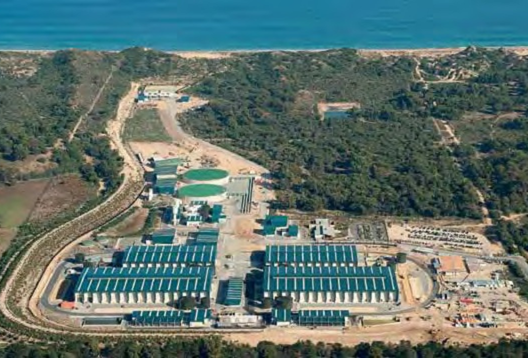
The Southern Seawater Desalination Plant at Binningup, WA

7 What are the impacts of climate change?

Climate change has impacts on ecosystems, coastal systems, fire regimes, food and water security, health, infrastructure and human security. Impacts on ecosystems and societies are already occurring around the world, including in Australia. The impacts will vary from one region to another and, in the short term, can be both positive and negative. In the future, the impacts of climate change will intensify and interact with other stresses. If greenhouse gas emissions continue to be high, it is likely that the human-induced component of climate change will exceed the capacity of some countries to adapt.
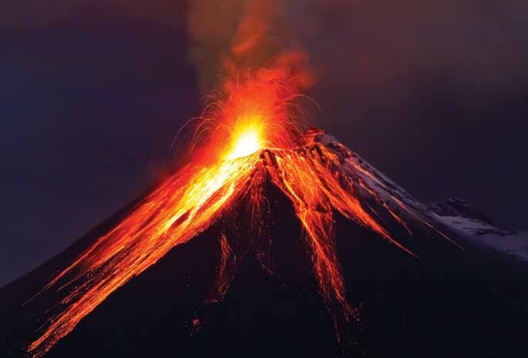
Volcanic eruption

8 What are the uncertainties and their implications?

There is near-unanimous agreement among climate scientists that human-caused global warming is real. However, future climate change and its effects are hard to predict accurately or in detail, especially at regional and local levels. Many factors prevent more accurate predictions, and some uncertainty is likely to remain for considerable time. Uncertainty in climate science is no greater than in other areas where policy decisions are routinely taken to minimise risk. Also, the uncertainty means that the magnitude of future climate change could be either greater or less than present-day best estimates.
Image Description
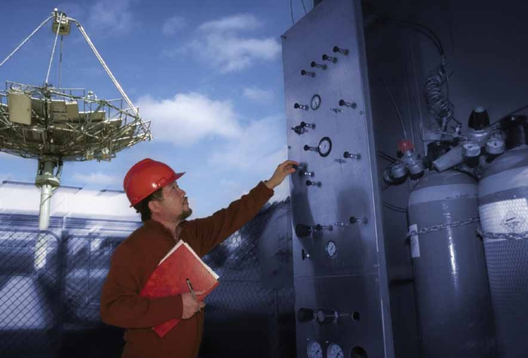
Adjusting the Solar Thermal Dish at the Lucas Heights Facility

9 What does science say about options to address climate change?

Societies, including Australia, face choices about how to respond to the consequences of future climate change. Available strategies include reducing emissions, capturing CO2, adaptation and ‘geoengineering’. These strategies, which can be combined to some extent, carry different levels of environmental risk and different societal consequences. The role of climate science is to inform decisions by providing the best possible knowledge of climate outcomes and the consequences of alternative courses of action.
Dots decorative image
Climate booklet

Read the publication

‘The science of climate change: Questions and answers’ was prepared by a working group of nine members co-chaired by Dr Ian Allison FAA and Professor Mike Raupach FAA FTSE. The document was also reviewed by an oversight committee of eight members chaired by Professor John Zillman AO FAA FTSE. This publication is an update of the Academy’s 2010 booklet of the same name.